寄存器Registers
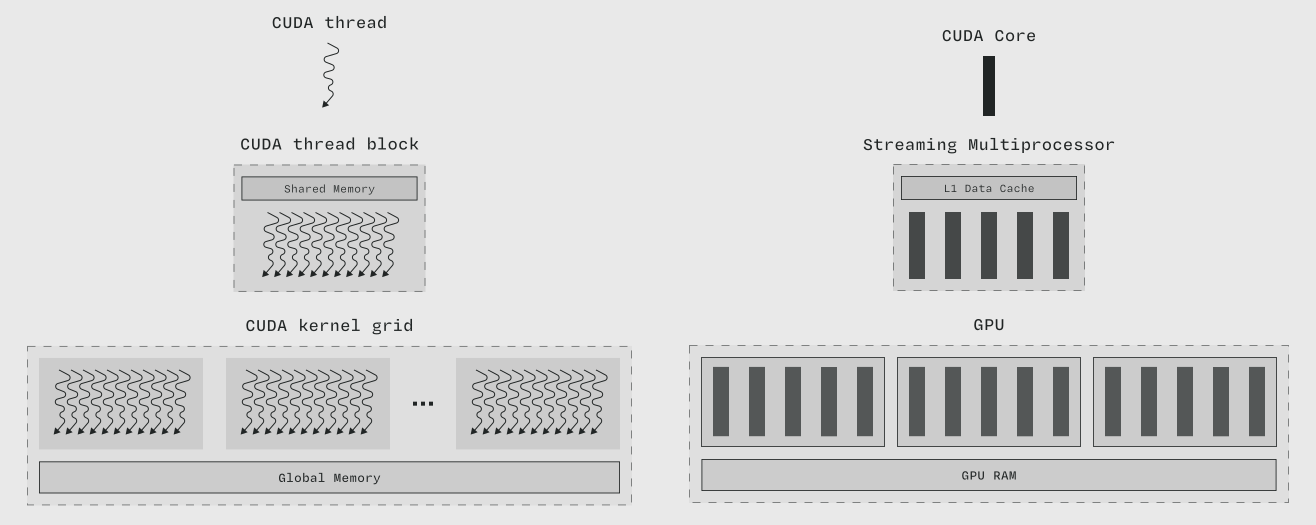
寄存器是 内存层次结构 中与单个 线程 相关联的内存(左图)。改编自 NVIDIA 的 CUDA Refresher: The CUDA Programming Model 和 NVIDIA CUDA C++ Programming Guide 中的图表。
内存层次结构 的最底层是寄存器,用于存储由单个 线程 操作的信息。
寄存器中的值通常存储在 流式多处理器 (SM) 的 寄存器文件 中,但也可能溢出到 GPU RAM 中的 全局内存,这会带来显著的性能损失。
与 CPU 编程类似,这些寄存器不能通过高级语言(如 CUDA C)直接操作。它们仅对底层语言可见,如 并行线程执行 (PTX)。它们通常由 ptxas 等编译器管理。编译器的目标之一是限制每个 线程 使用的寄存器空间,以便可以将更多 线程块 同时调度到单个 SM 中,从而提高 占用率。
英文原文(Modal GPU Glossary)
associated with individual threads (left). Modified from diagrams in NVIDIA's CUDA Refresher: The CUDA Programming Model and the NVIDIA CUDA C++ Programming Guide.](themed-image://cuda-programming-model.svg)
At the lowest level of the memory hierarchy are the registers, which store information manipulated by a single thread.
The values in registers are generally stored in the register file of the Streaming Multiprocessor (SM), but they can also spill to the global memory in the GPU RAM at a substantial performance penalty.
As when programming CPUs, these registers are not directly manipulated by high-level languages like CUDA C. They are only visible to a lower-level language, here Parallel Thread Execution (PTX). They are typically managed by a compiler like ptxas. Among the compiler's goals is to limit the register space used by each thread so that more thread blocks can be simultaneously scheduled into a single SM, increasing occupancy.
The registers used in the PTX instruction set architecture are documented here. The registers used in SASS are not, to our knowledge, documented.
相关词条
本词条改编自 Modal GPU Glossary(CC BY 4.0)· 中文翻译 miter6/gpu-glossary-zh,MAE 整理排版。