存储体冲突bank conflict
存储体冲突(bank conflict)指的是当一个 线程束 中的多个 线程 同时请求 共享内存 中同一存储体(bank)但不同地址的数据时出现的现象。
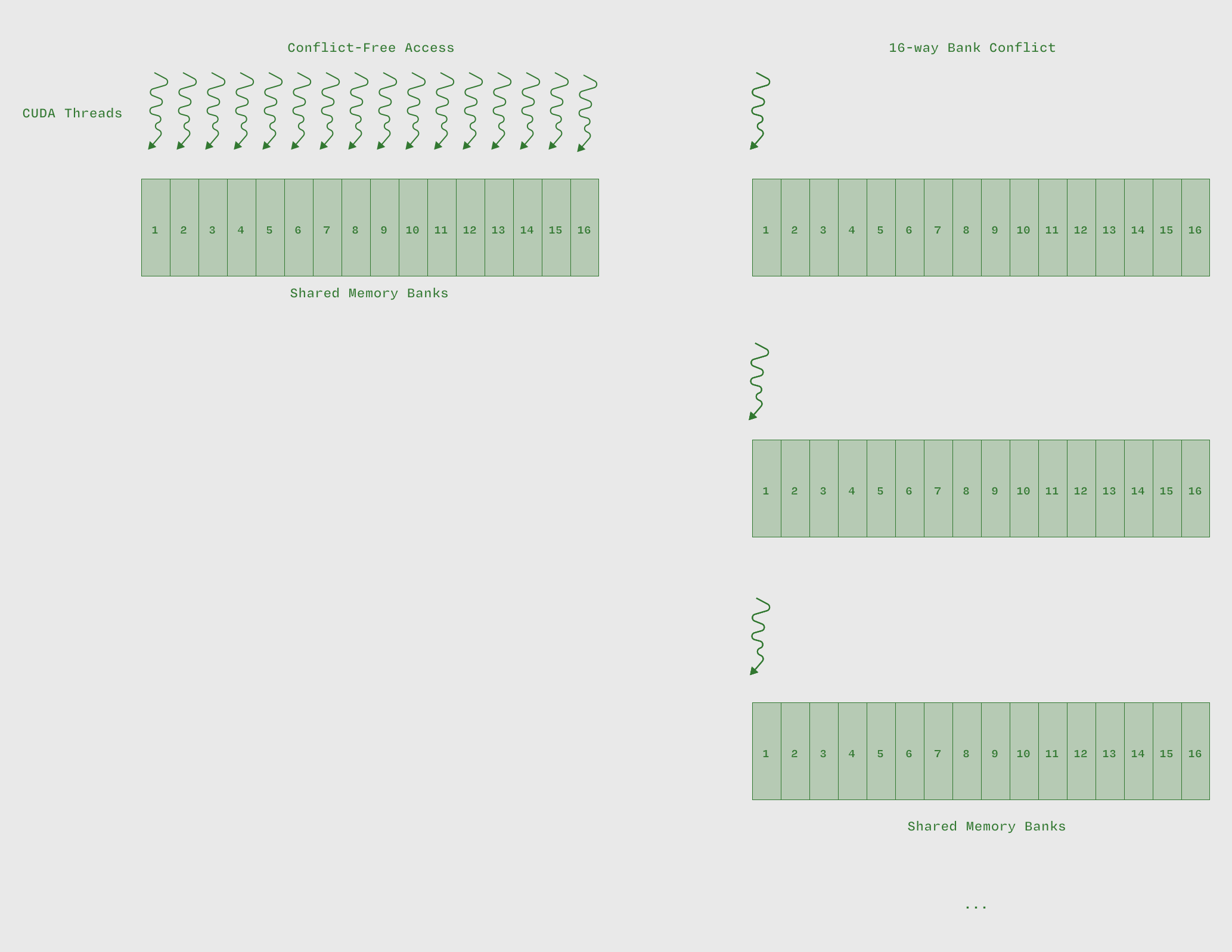 > 当 线程 访问不同的 共享内存 存储体时,访问是并行处理的(左图)。当所有线程都访问同一存储体的不同地址时,访问会被串行化(右图)。
当发生存储体冲突时,不同 线程 的访问会被串行化。这会导致内存吞吐量大幅下降,通常是整数倍降低,无法充分利用 内存带宽。
与其他 SRAM 缓存存储器类似,流式多处理器 中的 共享内存 被组织为多个 “存储体”(bank)。这些存储体可被同时访问,从而提升带宽。
在 GPU 中,有 32 个存储体,每个存储体宽度为 4 字节,连续的 32 位字(注意是 32 位而非 64 位,GPU 设计初衷是适配32位浮点数和整数)会映射到连续的存储体;
Address:  0x00  0x04  0x08  0x0C  0x10  0x14  0x18  0x1C  ...  0x7C
Bank:       0     1     2     3     4     5     6     7   ...    31

Address:  0x80  0x84  0x88  0x8C  0x90  0x94  0x98  0x9C  ...  0xFC

Bank:       0     1     2     3     4     5     6     7   ...    31
地址相差 32 × 4 = 128 字节的地址会映射到同一存储体。由于 共享内存 的容量大致在 KB 级别,因此多个地址会映射到同一存储体。
若线程访问共享内存数组的连续元素,线程束 中的每个线程 都会命中不同的存储体:
__shared__ float data[1024];  // array in shared memory

// all 32 threads access consecutive elements of data
int tid = threadIdx.x;
float value = data[tid];  // address LSBs: 0x00, 0x04, 0x08, ...
所有 32 次访问可在单次内存事务中完成,因为每个 线程 都命中了不同的存储体。这在上图的左侧所示。
但如果我们想让 线程 访问行优先存储的 共享内存 数组中某一列(假设每行有 32 个元素),于是我们这样写代码:
float value = data[tid * 32];  // address LSBs: 0x000, 0x080, 0x100 ...
// recall: floats are 4 bytes wide
如上图右侧所示,所有访问都命中了同一个存储体(Bank 0),因此必须串行处理,导致延迟增加了 32 倍,从大约十几个周期增加到数百个周期。解决此类存储体冲突的方法之一是通过转置 共享内存 数组来解决这个存储体冲突(将行优先存储为列优先)。有关解决存储体冲突的更多技术,请参阅 GTC 2024的《CUDA编程与性能优化入门》演讲。
需要注意的,如果 线程 访问同一存储体中的相同地址(即读取完全相同的数据),则不会发生冲突——数据可通过多播/广播机制一次性传输给所有线程。
英文原文(Modal GPU Glossary)
When multiple threads in a warp simultaneously request memory within the same bank in shared memory but across distinct addresses, we say there is a bank conflict.
access distinct shared memory banks, accesses are serviced in parallel (left). When they all access the same bank, but at different addresses, accesses are serialized (right).](themed-image://bank-conflict.svg)
When bank conflicts occur, the accesses by the distinct threads are serialized. This reduces memory throughput substantially, that is by an integral factor, preventing the saturation of memory bandwidth.
Like other SRAM cache memories, the shared memory in a Streaming Multiprocessor is organized into groups called "banks". These banks can be accessed simultaneously, which increases the bandwidth.
In GPUs, there are 32 banks, each bank is 4 bytes wide, and consecutive words of 32 bits (not 64 bits; GPUs were designed with 32-bit floats and integers in mind) map to consecutive banks.
Address:  0x00  0x04  0x08  0x0C  0x10  0x14  0x18  0x1C  ...  0x7C
Bank:       0     1     2     3     4     5     6     7   ...    31

Address:  0x80  0x84  0x88  0x8C  0x90  0x94  0x98  0x9C  ...  0xFC

Bank:       0     1     2     3     4     5     6     7   ...    31
Addresses that differ by 32 × 4 = 128 bytes map to the same bank. Shared memories are roughly kilobyte scale, and so multiple addresses map onto the same bank.
If we access sequential elements of an array in shared memory, each thread in our warp will hit a different bank:
__shared__ float data[1024];  // array in shared memory

// all 32 threads access consecutive elements of data
int tid = threadIdx.x;
float value = data[tid];  // address LSBs: 0x00, 0x04, 0x08, ...
All 32 accesses complete in one memory transaction because each thread hits a different bank. This is depicted on the left in the figure above.
But say we wanted our threads to access a column in a row-major shared memory array with 32 elements per row, and so we wrote:
float value = data[tid * 32];  // address LSBs: 0x000, 0x080, 0x100 ...
// recall: floats are 4 bytes wide
As depicted in the right side of the diagram above, all accesses hit the same bank, Bank 0, and so must be serialized, resulting in a 32x increase in latency, rising from on the order of ten cycles to on the order of hundreds. We could solve this bank conflict by transposing our shared memory array. For more techniques to resolve bank conflicts, see the _Introduction to CUDA Programming and Performance Optimization_ talk from GTC 2024.
Note that if threads access the same address in the same bank, i.e. the exact same data, conflict need not occur, as the data can be multi-/broad-cast.
相关词条
本词条改编自 Modal GPU Glossary(CC BY 4.0)· 中文翻译 miter6/gpu-glossary-zh,MAE 整理排版。